
Music - BA

About This Degree
When you pursue a music degree at Utah State University, you will find yourself immersed in a community of individuals committed to excellence, opportunity, and your future.
BA vs BM
The primary difference between the BA and the BM is that the BM is a pre-professional degree, preparing students for careers in performance, education, or pedagogy, while the BA is a liberal arts degree, designed to develop broadly-educated musicians and citizens.
What You Will Learn
Students in the Bachelor of Arts in Music program develop excellence in music within the context of the liberal arts. Core courses in music are complemented by a range of electives outside music, including language study.
BA students have a high degree of flexibility in choosing their electives, making this program perfect for students interested in a double major or careers in arts administration, music business, musicology, and music theory, among others.
The BA is also suitable for students who wish to study music in college but learn a broad range of skills that can be transferred to careers or graduate study in other fields.
Capstone Project
One of the most exciting aspects of the BA in Music is the capstone project, typically undertaken in the final year of study. The only requirements for a capstone project are that it must be meaningfully related to your program of study (courses you have taken, activities you have been involved in), it must result in some kind of public “product” (typically a presentation, performance, or publication), and you must find an appropriate faculty member who is willing to mentor the project. Projects include lecture-recitals, composition recitals, experimental and interdisciplinary performances, internships, analytical/historical/ethnomusicological studies, recording and producing an album, designing an arts business plan, and more.
Emphasis:
Students may choose an emphasis in one of the following areas.
Composition:
Students wishing a more directed experience in the context of the music BA degree can elect to adopt an emphasis in composition for the BA. This does not change the entrance requirements, or the curriculum for general education, musicianship, or performance. However, upper-level music electives are specific to the Composition Emphasis.
ADVISING
At a Glance
College: College of Arts & Sciences
Department: Music Department
USU Locations:
- Logan campus
Faculty: View profiles of faculty members on the department directory.
Learn More: Program website
Program Requirements
Career And Outcomes
Career Opportunities
With a degree in music, students may pursue the following careers:
- Music business
- Arts administration
- Musicology
- Music theory
- Studio musicians
- Touring musicians and recording artists
- Music dealership owners and managers
- Recording engineer
- Sound technician
- Music journalist
- Music arrangement
- Music composition
- Private studio instructors
- Corporate positions in the music industry
Job Outlook
USU Locations
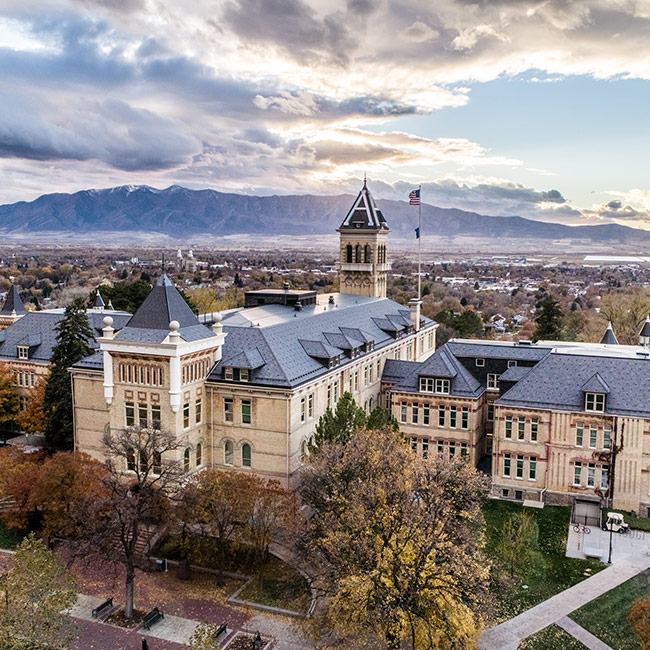
LOGAN CAMPUS
Admission
Admission Requirements
In addition to Utah State University’s admissions requirements, the music program has additional requirements:
- Music Application and Auditions: Incoming music students must apply to the music program and complete an audition to be accepted into the program. Visit the Music Application and Auditions page for the application and audition requirements.
- First-Year students: First-Year students admitted to USU in good standing qualify for admission as pre-majors.
- Transfer Students: Transfer students from other institutions need a 2.75 cumulative GPA to qualify, and students transferring from other USU majors need a 2.75 cumulative GPA to qualify for this major.
- To become a music major, students must complete the following:
- A required audition, which usually takes place the February before the student’s first year
- Other prerequisite coursework as determined by the department
International students have additional admissions requirements.
Take The Next Step
Visit Campus
Schedule a campus tour and come see what it's all about.
Cost and Aid
Learn about tuition, scholarships, and other financial aid opportunities.
How to Apply
Start your degree path and apply now.
You May Also Be Interested In

Audio Technology
Gain hands-on experience in audio technology with USU's certificate program, featuring courses in production, sound design, and live sound.

Basic Music
This minor is geared toward non-music majors who still want to explore the fundamentals. No matter what genre or instrument you prefer, you’ll gain hands-on experience in ensembles and from individual instruction with faculty.

Music
Prepare for a career in music performance or education and participate in dynamic performance opportunities through our ensembles.

Music Studies
Learn to listen to music with intention after classes in this minor, fostering a lifelong appreciation of all forms of music. Classes cover the fundamental theoretics, notations, cultures, and historical contexts of music.