
Utah State Blue Light Honors Outstanding Achievements
To demonstrate pride in the many accomplishments of Utah State University faculty, staff and students, the Aggie Blue Pride Light will be turned on Monday, Oct. 25, and the Carillon Bells will ring at 1:05 p.m. in the afternoon. Every four months the university designates a Blue Pride Light Night to recognize individuals for their outstanding achievements.
Honorees this quarter are John Carman, professor of plant genetics in the plant, soils and biometeorology department; Noelle Cockett, dean of the College of Agriculture; James MacMahon, professor in the biology department; Margie Memmott, associate professor and family, consumer science youth agent with the Juab county extension office; Kori Moore, a senior in environmental engineering; Wynn Walker, associate dean in the College of Engineering and professor of biological and irrigation engineering.
Carman recently received a patent for a clonal seed reproduction process that could feed millions of people throughout the world and add billions to the U.S. agricultural economy. The technology involves a process that allows seeds to form asexually, without the male gender, producing generational clones. The process could save seed producers hundreds of millions each year and increase yields up to 35 percent. The added yield in rice alone could feed an additional billion people throughout the world.
Cockett was awarded a 2004 Governor’s Medal in Science and Technology for her internationally recognized research program in sheep genomics. Cockett’s work at Utah State has centered on sheep genetics, including research on a recessive genetic defect in sheep known as Spider Lamb Syndrome. The syndrome, which causes skeletal abnormalities and premature death, is common in several breeds of sheep.
Cockett identified the genetic marker for the condition, providing an effective tool for eliminating the syndrome from sheep populations. This has had a significant economic impact in the state of Utah and the world, particularly for sheep producers. Countries that previously wouldn’t accept sheep from this country now import them upon proof that they don’t carry the mutation.
MacMahon, along with a team of scientists representing the American Institute of Biological Sciences, has been charged with answering some of the most important ecological questions confronting society. The team received a $6 million grant to form the National Ecological Observatory Network (NEON), a major new initiative of the National Science Foundation (NSF).
Once established, the network will allow scientists to tackle, from local to continental scales, important ecological questions confronting society. Topics researched by the network will include invasive species, infectious disease, biogeochemical cycling, land-use change, biodiversity, global climate change, hydroecology and other emerging issues of national importance.
Memmott was elected western region director for the National Extension Association of Family and Consumer Sciences (NEAFCS) at its national conference in Tennessee this fall. NEAFCS educates and recognizes Extension professionals who impact the quality of life for individuals, families and communities. Its members link research to life experiences by interpreting research and delivering that information to families.
Extension family and consumer science educators help people develop the skills necessary to care for family members, promote individual growth and development and meet individual and family needs for food, housing, fuel and other requirements essential to health and safety.
NEAFCS represents nearly 2,500 active and affiliate members working in family and consumer science Extension across the nation and its territories. In addition, the association has 1,055 life members.
Moore recently won first place in the Undergraduate Division of the Air and Waste Management Association’s 2004 Student Poster/Paper Competition at the association’s national conference held June 21-25 in Indiana.
Moore’s research found that there is a strong correlation between a strong, wintertime temperature inversion and high pollution episodes, such as those experienced in Cache Valley in January and February 2004.
He also found that the bottom of the temperature inversion occurs about 500 feet above the valley floor. This means that the pollutants released can only mix with the air contained below that level, which produces high concentrations of pollutants, Moore said.
Walker also received a 2004 Governor’s Medal in Science and Technology. He is an international figure in the field of irrigation engineering and water management.
Throughout his years of service to Utah State he has taught at both the undergraduate and graduate level and has mentored more than 30 master’s students and more than 20 doctoral students. His former students now hold significant positions in governments around the world. Many make water resources and policy management decisions that affect millions of people on five continents.
During his career, Walker served for many years as head of Utah State’s biological and irrigation engineering department, where his leadership fostered the growth of an internationally recognized program in irrigation engineering. The program continues to provide technical assistance in support of agricultural and economic development.
The Aggie Blue Pride Light atop Old Main lights the Cache Valley night sky as a symbol of Aggie tradition, heritage and pride. The outstanding professors, staff and students honored are a part of this heritage and contribute to the high quality of Utah State.
Contact: John DeVilbiss (435) 797-1358
Writer: Maren Cartwright (435) 797-1355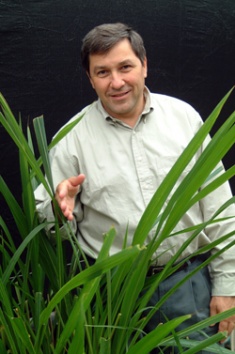
John Carman

Noelle Cockett

James MacMahon

Margie Memmott
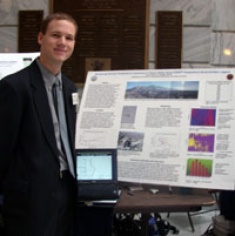
Kori Moore
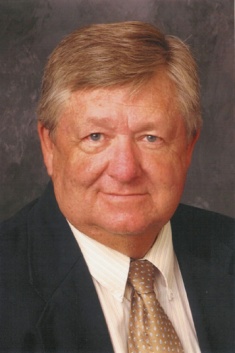
Winn Walker
SHARE
TRANSLATE
Comments and questions regarding this article may be directed to the contact person listed on this page.


