
USU's Science Unwrapped Confronts 'Mighty Phragmites' Friday, Feb. 20
USU wetlands ecologist Karin Kettenring is featured Science Unwrapped speaker Friday, Feb. 20, at 7 p.m. in USU's Eccles Science Learning Center Auditorium. Admission is free and all ages are welcome.
Thoughts about wild landscapes surrounding the Great Salt Lake usually conjure images of the vast West Desert and the famous Bonneville Salt Flats. Yet another critical feature is an extensive network of wetlands surrounding Utah’s massive, salty sea.
“Wetlands are among Utah’s most critical ecosystems,” says Utah State University wetlands ecologist Karin Kettenring. “They’re especially important in an arid region as they supply the basic needs of wildlife – food, water, a breeding ground and shelter from predators – in a surprisingly compact space.”
Yet the Great Salt Lake wetlands are vulnerable to a number of threats, including pollution, loss of habitat from development, climate change and pesky, persistent invasive plants known as phragmites (“frag MY’ tees”).
Kettenring addresses these challenges, along with special features of Great Salt Lake wetlands, as featured speaker for USU’s Science Unwrapped Friday, Feb. 20, at 7 p.m. in the Emert Auditorium (Room 130) of the Eccles Science Learning Center on campus. Her talk, “Mighty Phragmites: Controlling Plant Invaders in Great Salt Lake Wetlands,” is free and open to all ages. Hands-on learning activities, exhibits and refreshments follow her presentation.
Hosted by USU’s College of Science, Kettenring’s presentation is the second of four presentations in Science Unwrapped’s spring 2015 “Great Salt Lake Today” series during the university’s Year of Water.
“We welcome our community to experience this fascinating series,” says Nancy Huntly, Science Unwrapped chair, director of USU’s Ecology Center, professor in the Department of Biology and co-director of USU’s ARTsySTEM. “Our presentations offer something for everyone.”
For more information, call 435-797-3517, visit the Science Unwrapped website or view the ‘Science Unwrapped at USU’ Facebook page.
Related links:
“Genetic Diversity Key to Ecosystem Restoration says USU Ecologist,” Utah State Today
Contact: Nancy Huntly, 435-797-2555, nancy.huntly@usu.edu
Writer: Mary-Ann Muffoletto, 435-797-3517, maryann.muffoletto@usu.edu
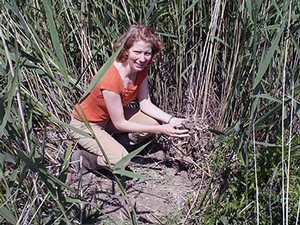
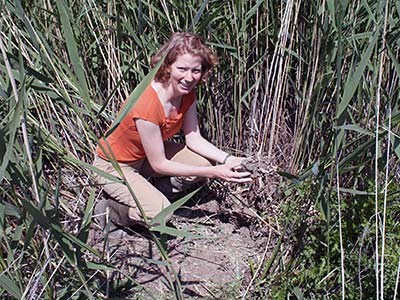
Kettenring examines the 'rhizomes' or roots of invasive plants known as phragmites in Utah wetlands. The scientist discusses the importance of the Great Salt Lake’s wetlands Friday, Feb. 20 at Science Unwrapped. All are welcome.
SHARE
TRANSLATE
Comments and questions regarding this article may be directed to the contact person listed on this page.


