
USU's Highest Research Recognition goes to Chemistry and Biochemistry Head
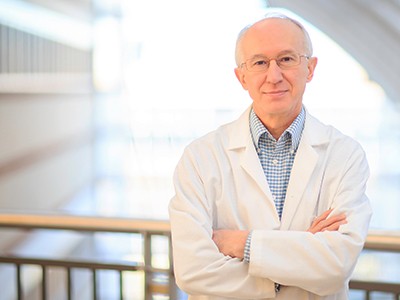
Dr. Alvan Hengge, professor and head of Utah State University's Department of Chemistry and Biochemistry is the recipient of the 2015 D. Wynne Thorne Career Research Award.
Alvan Hengge, professor and head of the Department of Chemistry and Biochemistry at Utah State University, has been named the recipient of the 2015 D. Wynne Thorne Career Research Award.
“Alvan is a brilliant and well-established source of innovation at Utah State University, and has been critical in improving the national reputation of our chemistry program,” said USU President Stan Albrecht. “His unique, extensive experiences in education and research make him a clear example of excellence that our faculty and student body can look up to. This award is well deserved.”
Named after USU’s first vice president for research, the award is given annually to an individual who has completed outstanding research in his or her career, yet “Hengge’s unorthodox background demonstrates in real terms his dedication to teaching and his ideal of the inseparability of teaching from research,” according to Steve Scheiner, professor of chemistry and biochemistry at USU.
Hengge grew up, completed his bachelor’s and began his career in Cincinnati, Ohio. However, for someone who has studied multiple disciplines, his career did not take an expected trajectory — Hengge spent the first seven years after his undergraduate degree teaching high school chemistry and physics.
“Growing up very much a child of the ‘60s, I was always very interested in social causes,” Hengge said. “There were some interesting developments going on with different ways to structure teaching in schools, and I really enjoyed that.”
Over time, Hengge continued his eclectic training, which included undergraduate chemical engineering, organic chemistry in graduate school and biochemistry as a postdoctoral fellow. This background led him to unique perspectives in his research.
“Alvan has developed and maintained an extremely ambitious multi-disciplinary research program where he brings together a fundamental strength in mechanistic organic chemistry, as well as physical and biological chemistry,” said Stan Brown, professor emeritus of chemistry at Queen’s University in Ontario.
Hengge’s research focuses on the field of phosphoryl transfer, a process that’s of major biological importance.
“Each phosphoryl transfer reaction that occurs within living organisms is mediated by an enzyme known as a phosphotransferase; its absence or malfunction is typically catastrophic to the host organism,” said Debra Dunaway-Mariano, professor of chemistry and chemical biology at the University of New Mexico.
“Whatever the venue, when the topic of enzyme-catalyzed phosphoryl transfer reactions comes up, the discussion always gravitates to what is being discovered in the Hengge laboratory,” said Daniel Quinn, professor of chemistry at the University of Iowa.
According to Scheiner, Hengge has consistently generated important insights into the mechanisms of enzyme function. He said Hengge has developed a strong international reputation, and is recognized as one of the leaders in his field worldwide, with a well-cited body of literature to his credit.
Having published some 121 peer-reviewed articles, which have been cited 2,600 times, Hengge is prolific in his field. Invitations for him to present his research have come from prestigious universities that include Albert Einstein, UC-Davis, the Mayo Foundation, McMaster, Utah and Case Western. His recognition has international aspects as well, with invitations to speak from Spain, Australia, UK, Brazil and China, most recently.
Hengge has been asked to review articles submitted for publication to more than 20 journals, some of them the most prestigious in chemistry, including the Journal of the American Chemical Society, Journal of Organic Chemistry, Biochemistry, Proceedings of the National Academy of Sciences, Inorganic Chemistry, Chemical Reviews and Protein Science. He has also received nearly $3 million in research grants throughout his career.
“He has been a conscientious mentor and advocate of his students, whom he has supported with a steady stream of hard fought and competitive external dollars,” Scheiner said.
At USU, his exceptional performance has already been well documented: He is the only professor in USU’s College of Science to receive all three annual awards for outstanding researcher, teacher and undergraduate research mentor. And, part of that success comes from his early teaching career.
Hengge said those early years as a teacher in an urban inner-city high school with predominantly children of low-income families left a significant effect.
“For the students that I had, it became clear that when you hold people’s feet to the fire, they can rise to the challenge and meet high standards.”
Hengge has translated this lesson into a philosophy he still uses today, as he’s mentored eight PhD students, three masters students and 24 undergraduates. Hengge said that instead of focusing on getting students perfect grades, the commitment should be to the subject being taught, and that approach has led to great success among his students.
“It is fair to say that a paper of his without a student author is exception in Hengge’s record,” said Scheiner.
In this case, this love for science also runs in the family. Hengge’s son, Neal, recently graduated from USU in biological engineering and was involved in the Undergraduate Research Fellows program. Hengge said his son came to that interest in the sciences on his own, though.
“We’ve tried to just expose our kids growing up to a variety of things,” Hengge said. “I never tried to push them to a career in the sciences. In high school, chemistry was actually his least favorite. Now that he’s in graduate school in a bioengineering program, he’s found that his biochemistry courses are his favorite courses.”
Hengge went on to say that one of the most fun things of the past year has been being able to talk science with his son, including being able to share articles they find and bounce ideas off each other.
“That’s a dream come true for any scientist, I think, to be able to talk science with your son,” Hengge said with a smile.
“The widespread nature of Alvan’s accomplishments is a testament to how invaluable he is to Utah State University,” said Mark McLellan, vice president for research and dean of graduate studies. “We’re pleased to give him this award and are excited to see what he will accomplish next.”
Hengge will be honored at USU’s Research Gala Monday, April 6, at the Riverwoods Conference Center. The gala is part of the 11th annual Research Week, with five days of events highlighting USU’s best faculty, graduate and undergraduate researchers. More information can be found online.
Nominees for the D. Wynne Thorne Career Research Award are recommended by a committee of peers for the significance and quality of their research and creative achievement and recognition by national and international experts.
Related links:
- USU Department of Chemistry and Biochemistry
- USU College of Science
- USU Vice President for Research and Graduate Studies
Contact: Mark McLellan, mark.mclellan@usu.edu
Writer: Seth Merrill, seth.merrill@usu.edu
SHARE
TRANSLATE
Comments and questions regarding this article may be directed to the contact person listed on this page.


