
USU Engineering Faculty Chosen for Prestigious NAVY Research Program

Tadd Truscott will receive funding from the Office of Naval Research to further scientific understanding of swarming behavior in animals. There has been increased interest in developing swarming intelligence to control collective groups of autonomous vehicles that perform surveillance, search and rescue and other coordinated operations.
A Utah State University assistant professor of engineering will receive major funding from the Department of the Navy’s Young Investigator Program for new research that could unveil how animal swarming behavior can be programmed into autonomous vehicles.
Tadd Truscott, best known for his mesmerizing fluid mechanics images, is developing new methods to observe and mimic the puzzling behavior that drives schools of fish or flocks of birds that swarm and move together in perfect synchronization.
“Developing these forms of swarming algorithms from the ground up would be daunting,” said Truscott, “But nature has already figured out how autonomous creatures can move together with striking efficiency in, for example, a shoal of herring or a murmuration of starlings.”
The Office of Naval Research, or ONR, announced May 1 it is awarding Truscott and 35 other college and university researchers around the country a total of $18.8 million in grants to fund research across a range of Navy-related science and technology areas.
Winners represent 31 academic institutions across the country in disciplines ranging from nanoelectronics, robotics, machine learning, acoustics, structural and fluid dynamics, quantum science, ocean-atmospheric interaction, solar cells, communication, neural and cognitive science and undersea technologies.
Truscott’s research will be in deciphering how an animal’s individual sensory inputs and movements lead to the behavior of a larger group. A better understanding of swarming behavior has big implications for our modern world.
“Recently, there has been increased interest in using collective groups of autonomous vehicles to perform coordinated surveillance, search and rescue, environmental hazards modeling or coordinated evasion operations,” said Truscott. “Our observation techniques focus on kinematics and sensory cues. From that, we’ll develop models of the animals’ behavior and attempt to mimic them by implementing our models in swarms of small table robots.”
Truscott’s team will use a multi-camera array to capture high resolution imagery of insects, birds and small fish. This data will then be analyzed and incorporated into 3D models.
“We intend on focusing our models on two-dimensional behaviors like the motion of whirligig beetles on the surface of the water and Tour de France riders to begin with, and then eventually move on to fish in the laboratory,” he explained. “This approach will allow us to use our technology to observe and model simultaneously in a step-by-step-approach.”
ONR’s Young Investigator Program is designed to promote the professional development of early-career academic scientists. The funding supports lab equipment, graduate student stipends and other expenses.
“These recipients demonstrate the type of visionary, multidisciplinary thought that helps the U.S. Navy anticipate and adapt to a dynamic battlespace,” said Larry Schuette, ONR’s director of research. “The breadth of their research and combined value of awards underscore the significance the Navy places on ingenuity, wherever it's harbored, and support the framework for a Naval Innovation Network built on people, ideas and information.”
Awardees receive annual monetary awards over a three-year period.
(The Office of Naval Research contributed to this report.)
Related links:
USU Mechanical and Aerospace Engineering Department
Contact: Tadd Truscott, 435-797-8246, taddtruscott@gmail.com
Writer: Matt Jensen, 435-797-8170, matthew.jensen@usu.edu
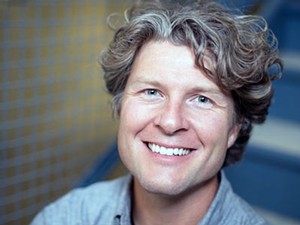
Tadd Truscott is a faculty member in USU's Department of Mechanical and Aerospace Engineering and the College of Engineering.

SHARE
TRANSLATE
Comments and questions regarding this article may be directed to the contact person listed on this page.


