
USU-based Berryman Institute Introduces Wildlife Journal
Utah State University professor Mike Conover recalls a few decades ago when The Wildlife Society’s venerable Journal of Wildlife Management turned down his first manuscript on human-wildlife conflicts. The editors explained that “animal damage control,” as Conover’s topic was called in those days, was “outside the purview of the journal and not a part of the field of wildlife management.”
These days, the JWM, other scholarly publications and the mainstream media are starting to welcome articles on human-wildlife conflicts, a topic that increasingly dominates discussion among wildlife scholars and professionals. Joining the dialogue is the newly introduced biannual journal Human-Wildlife Conflicts, a publication of the Jack H. Berryman Institute based jointly at USU and Mississippi State University.
“It’s still hard to find a home for articles on human-wildlife conflicts,” says Conover, a faculty member in USU’s Department of Wildland Resources, who serves as editor-in-chief of the new journal. “What’s been lacking is a peer-reviewed scientific journal dedicated to these issues.”
Conover says the journal was created to enhance the teaching, research and outreach efforts of the Berryman Institute. Established at USU in 1990 with funding from the U.S. Department of Agriculture’s Animal and Plant Health Inspection Service’s Wildlife Services division, the academic center seeks science-based solutions to enable humans and wildlife to coexist. The center welcomed Mississippi State as a partner for the institute’s eastern branch in 2002.
The inaugural Spring 2007 issue of Human-Wildlife Conflicts features 14 peer-reviewed articles from scientists throughout the nation, along with columns, news, a book review, a memorial section and an editorial section called “The Soap Box.”
The intended audience for the journal, says Philip Parisi, managing editor of the new journal, includes researchers, academics, wildlife biologists, USDA Wildlife Services employees, nuisance wildlife control operators and “any folks who want to stay abreast of the field and want to see human-wildlife conflicts decrease in frequency and severity.”
Conover says he’s encouraged by response to the journal’s requests for contributions and the caliber of submissions. He praises Parisi’s editorial oversight of the new project and credits him for the publication’s high quality.
The journal is available free of charge by contacting Parisi at 435-797-3593 or hwc@cc.usu.edu. Journal articles can also be downloaded from the institute Web site.
Co-directors of the Berryman Institute are Johan du Toit, professor and head of USU’s Department of Wildland Resources, and Bruce Leopold, professor and head of MSU’s Department of Wildlife and Fisheries.
Related Links
Contacts: Philip Parisi [hwc@cc.usu.edu], 435-797-3593; Michael Conover [conover@cc.usu.edu], 435-797-2436
Writer: Mary-Ann Muffoletto [http://maryann.muffoletto@usu.edu], 435-797-1429
The USU-based Jack H. Berryman Institute introduces 'Human-Wildlife Conflicts,' a twice yearly wildlife science journal.
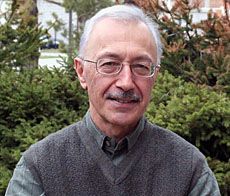
Philip Parisi is managing editor of 'Human-Wildlife Conflicts,' which recently published its inaugural Spring 2007 issue.
SHARE
TRANSLATE
Comments and questions regarding this article may be directed to the contact person listed on this page.


