
USU Assistant Professor's Book Delves into Tweens’ Online Lives
Deborah Fields’ new book, Connected Play: Tween Life in a Virtual World, will be released Oct. 15. In Connected Play, Fields and co-author Yasmin Kafai investigate what happens when kids play in virtual worlds, how this matters for their offline lives and what this means for the design of educational opportunities in digital worlds.
Fields is an assistant professor in the Instructional Technology and Learning Sciences Department at Utah State University. The book she co-authored with Kafai of the University of Pennsylvania is published by The MIT Press.
While it showcases research on how children learn, create and interact online, it will also interest developmental psychologists, digital media scholars, parents, educators and online social media developers.
“With all the talk on ‘big data,’ we actually have some of the earliest work on that in education,” Fields said. “We recorded 600 kids’ every click and word of chat for six months, with signed permission. In addition to statistics and analyses on overall trends in participation, we also looked line by line at many kids’ activities to get at the richness of their interactions and play online, as well as their contrasts between online and offline social interactions.”
The research continues to mine one area of interest for Fields: the way children use social media. While many traditional social media sites are intended for teenagers and adults, tweens often participate on creative, commercial and educational sites with social features like commenting, chatting and sharing. It’s a worrisome thing for some parents and educators, who want to make sure their children are safe online.
“This book by Kafai and Fields gently disarms and redirects these concerns towards a productive intergenerational dialog and positive agenda for educational research and design,” Mizuko Ito of the University of California, Irvine, wrote in a foreword of the book. “The authors do this not by simply asserting their expertise or a moral imperative about children and technology, but through careful observation and representation of the agency, ingenuity and social conscience of children themselves.”
More information is available on the Emma Eccles Jones College of Education and Human Services blog.
Related links:
USU Instructional Technology and Learning Sciences Department
USU Emma Eccles Jones College of Education and Human Services
Contact: Deborah Fields, deborah.fields@usu.edu
Writer: JoLynne Lyon, 435-797-1463

Deborah Fields and co-author Yasmin Kafai investigate what happens when kids play in virtual worlds, how this matters for their offline lives and what this means for the design of educational opportunities in digital worlds.
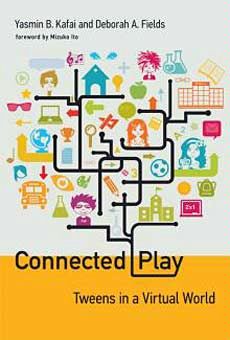
Deborah Fields and co-author Yasmin Kafai investigate what happens when kids play in virtual worlds, how this matters for their offline lives and what this means for the design of educational opportunities in digital worlds.
TOPICS
Books 89storiesSHARE
TRANSLATE
Comments and questions regarding this article may be directed to the contact person listed on this page.


