
Uneasy Neighbors: Science Unwrapped Explores Viral Spread from Animals to Humans
By Mary-Ann Muffoletto |
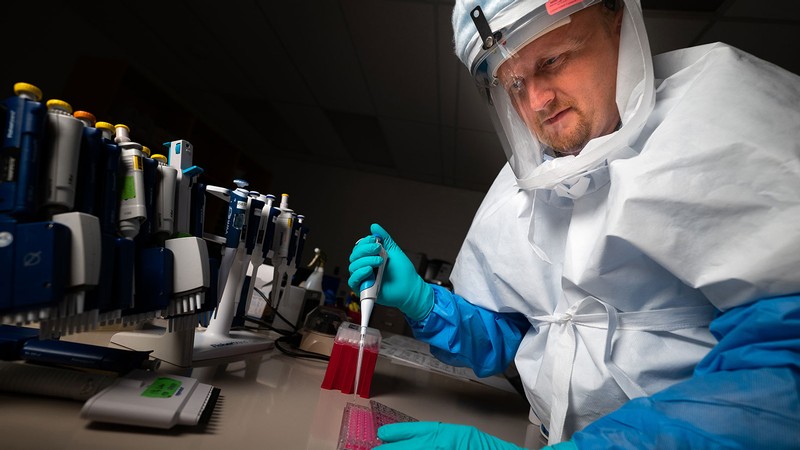
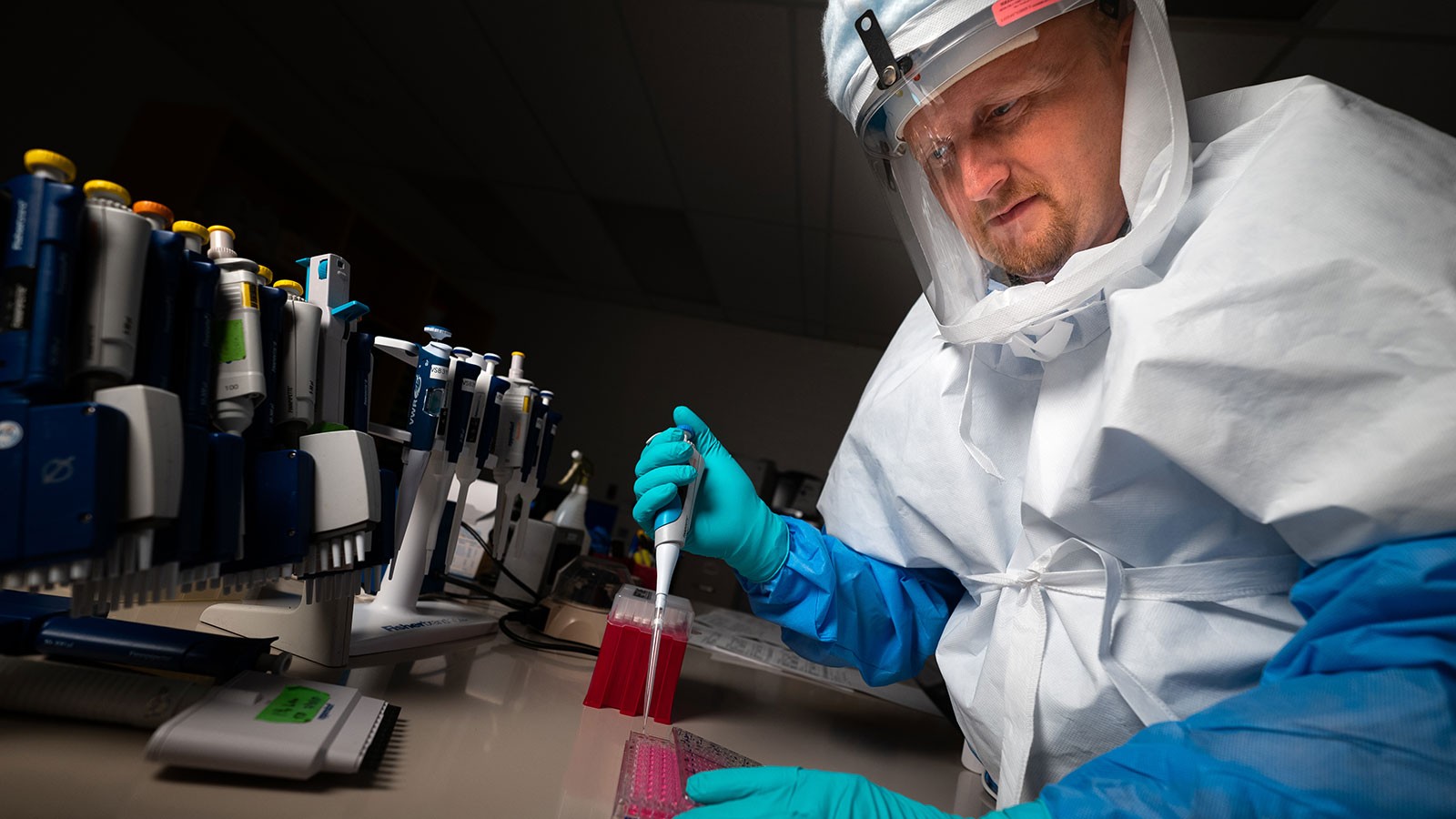
Friday, Nov. 13, Science Unwrapped welcomes featured speaker Brett Hurst, SARS-CoV-2 researcher in USU's Antiviral Research Institute. His talk is broadcast at 7 p.m. via Zoom. All are welcome. Levi Sim.
Centuries ago, as humans began to domesticate animals and till the earth, their communities increased in population density – of both people and animals. Close proximity brought benefits, but also brought new dangers. So-called “crowd diseases,” such as malaria, tuberculosis and influenza emerged and spread like wildfire through human hosts.
Where did these diseases come from? The answer is animals unwittingly serving as microbe reservoirs. Many of these diseases, which are transmissible from human to human, began as zoonoses (or zoonotic diseases); illnesses caused by germs spread from animals to people.
Utah State University’s Science Unwrapped delves into this topic Friday, Nov. 13, with featured speaker Brett Hurst, research assistant professor in USU’s Department of Animal, Dairy and Veterinary Sciences and The Institute for Antiviral Research, presents “Uneasy Neighbors: How Interactions Between Humans and Animals Can Cause Pandemics” at 7 p.m. via Zoom.
All ages are welcome to tune in to the webinar on Science Unwrapped’s website, which will also feature links to video learning activities.
Hurst’s research focuses on viruses and evaluating treatments for the diseases they cause. With colleagues at USU and around the world, he’s been studying SARS-CoV-2, the novel coronavirus that causes COVID-19, since the beginnings of the outbreak. SARS-CoV-2 is thought to have been transmitted to humans from bats.
“We still have lots of questions, but the majority of viruses affecting humans were initially caused by interactions between people and animals,” Hurst says. “At Science Unwrapped, we’ll take a look at this phenomenon and learn about frontline science being used to combat this current pandemic.”
Hurst’s presentation is part of Science Unwrapped’s 2020-21 “Brave New World” series, which kicked off in September and continues through April 2021.
For more information, call 435-797-3517, visit the Science Unwrapped website or view the ‘Science Unwrapped at USU’ Facebook page.
Science Unwrapped, the USU College of Science's public outreach program, continues its 2020-21 'Brave New World’ series at 7 p.m., Friday, Nov. 13 via Zoom. Featured speaker is USU SARS-CoV-2 researcher Brett Hurst.
WRITER
Mary-Ann Muffoletto
Communications Specialist
College of Arts & Sciences
435-797-3517
maryann.muffoletto@usu.edu
CONTACT
Greg Podgorski
Associate Dean for Undergraduates, Science Unwrapped Chair
College of Science
435-797-2479
greg.podgorski@usu.edu
SHARE
TRANSLATE
Comments and questions regarding this article may be directed to the contact person listed on this page.


