
Student Support Services Awarded Outstanding Advising Program 2004
The office of Student Support Services at Utah State University was recognized with a new award as the Outstanding Advising Program for 2004. The award was presented by John Mortensen, director of University Advising and Transfer Services at Utah State.
The Outstanding Advising Program Award was established to recognize programs that document innovative and exemplary practices that result in improved academic advising, Mortensen said.
Student Support Services is the first recipient of the award and is now eligible for the Outstanding Advising Program Award presented by the National Academic Advising Association.
Director of Utah State's Student Support Services Nazih Al-Rashid said Student Support Services focuses on helping students to connect with the university system of advising.
“We want students to be familiar with the system for selecting courses and to have a personal connection with advising through the system,” Al-Rashid said.
A selection committee of university staff and students reviewed this year's nominations. Candidates for the award were reviewed on a number of criteria, including innovative quality and creativity. Innovative quality represents new approaches to effective academic advising while creativity demonstrates the creative use of resources — human, fiscal and physical — in the delivery of academic advising services.
“It feels very good to receive this award because it gives us a sense of assessment of our performance,” Al-Rashid said.
“My position as an advisor affords me the opportunity to exercise a developmental theory of advising,” said Carol Sainsbury, advisor for Student Support Services. “This theory is based on the development of a close student-advisor relationship intended to assist students in achieving educational, career and personal goals.”
Sainsbury was the Utah State University professional advisor for 2001.
“When students know they can count on you the trust level is increased and they tend to come back,” she said.
The ability to address current problems and issues in academic advising was considered in the award recognition, as was a demonstrated commitment to advising throughout the university. Evidence of providing positive student and institution outcomes in advising was considered, along with how well the techniques and practices of the advising produces could be transferred to a wide variety of institutions.
“We think about each personal situation, including financial or other barriers when helping the needs of each student,” said Al-Rashid.
Student Support Services at Utah State is an exemplary program that has been recognized for its best practices in serving disadvantaged students by providing holistic and integrated services, according to its information packet. Eligible students for the program include students who meet federal low-income, disability, and/or first-generation guidelines. The program’s major goals include increasing retention, increasing academic success and increasing the percent of students to graduate.
“The importance of good advising to students is to keep students coming to school and to help students perform well academically,” said Al-Rashid.
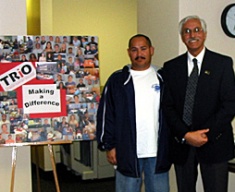
Director of Utah State's Student Support Services Nazih Al-Rashid with a student. The office was named the Outstanding Advising Program for 2004 at Utah State.

Student Support Services Advisor Carol Sainsbury meets with a student.
SHARE
TRANSLATE
Comments and questions regarding this article may be directed to the contact person listed on this page.


