
Expert on Christian Ethics and the Environment Next in Tanner Talks Series
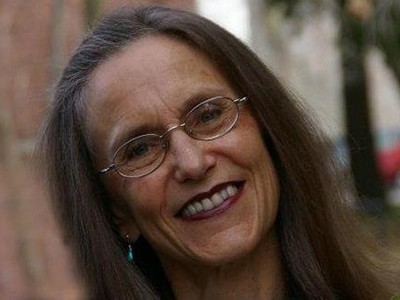
Cynthia Moe-Lobeda, a professor of Christian ethics, will speak at 12:30 p.m. Monday, April 10, in the Taggart Student Center auditorium. The lecture is free and open to the public.
The author of a book described by linguist Karin Dejonge-Kannan as “one of the most important books I have read in the past five years,” is the next presenter in the Tanner Talks lecture series sponsored by the College of Humanities and Social Sciences at Utah State University.
Cynthia Moe-Lobeda, a professor of Christian ethics, will speak at 12:30 p.m. Monday, April 10, in the Taggart Student Center auditorium. The lecture is free and open to the public.
Wild author Cheryl Strayed appears in a Tanner Talks event today, April 6. Free tickets for the lecture have all been claimed.
Moe-Lobeda is the author of Resisting Structural Evil: Love as Ecological-Economic Vocation (Fortress Press, 2013), which looks at urgent environmental questions from a Christian-ethics point of view and “calls us to action,” said Dejonge-Kannan. Dejonge-Kannan is a principal lecturer in second-language teaching and linguistics in CHaSS’s department of Languages, Philosophy and Communication Studies.
The book, she said, “articulates clearly the connection between all of us as humans together on this planet and compellingly describes the effect that our choices have on people far away.”
Moe-Lobeda teaches at the Graduate Theological Union, a Berkeley, Calif.-based ecumenical and interreligious foundation that offers graduate work in building bridges among Christian denominations and other faith traditions. She has lectured throughout the world on theology and matters of climate justice, economic justice, environmental racism, economic globalization, moral agency, public church and eco-feminist theology.
Moe-Lobeda has authored other books such as Healing a Broken World (Fortress Press, 2002). Dejonge-Kannan, however, returns to her appreciation of Resisting Structural Evil and “its unapologetic critique of consumerism, which seems to have become the new god of North American society.”
She added, “While a book such as this could easily be focused on doom and lead to shoulder-shrugging hopelessness, it instead calls us to action. It points out that the world’s problems cannot be solved by individuals, yet all viable solutions to the world’s problems require the action of (many!) individuals together.”
Related links:
Tanner Talks
Contact: Janelle Hyatt, Janelle.hyatt@usu.edu, 435-797-0289
SHARE
TRANSLATE
Comments and questions regarding this article may be directed to the contact person listed on this page.


