
Charles Potts, Prolific American Poet, Donates his Collection to Utah State
In the basement of the Merrill-Cazier Library nearly 80 linear feet of untouched correspondence, literary manuscripts, diaries and small press and first edition books of poetry lie waiting for someone to explore their contents and write their history.
The collection comprises the works and communications of Charles Potts, a prolific poet from Idaho, with ties to some of the great American writers such as Charles Bukowski and lesser known poets like Charles Foster.
Potts donated his collection to Utah State University in fall 2010, aiming to open the archives to humanities researchers. He will visit USU Sept. 7-9. While on campus, he will present two readings, co-teach a creative writing course and provide insight about the material to students and faculty.
The collection includes broadsides, correspondence, manuscripts, diaries and thousands of literary magazines and books Potts amassed from nearly five decades of writing and publishing poets. For Brad Cole, associate dean for Special Collections and Archives at USU, it adds a regional perspective to the university’s section of Beat poetry as well as a primary source material.
“It highlights and augments the collection we have,” he said. “Hopefully, it will attract scholars to USU. Potts really worked hard to publish a lot of small, unknown poets.”
Potts grew up raising Appaloosa horses on a ranch in Mackay and thought he would write novels after reading Fyodor Dostoyevsky. However, while attending Idaho State University he became a protégé of the celebrated American poet Ed Dorn, whose work convinced Potts he no longer wanted to write books.
“The brevity, the succinctness and the depth that you can get with poetry — that really appealed to me,” Potts said. “I really feel that if someone has something to say, they should just spit it out.”
And for nearly 50 years he has.
Potts’ poetry was first published in the periodical Wild Dog in 1963 and he has continued to publish poetry ever since. He founded Litmus Inc. in Seattle and Berkeley, which printed numerous first editions, including Bukowski’s “Poems Written Before Jumping Out of an 8-Story Window” in 1968.
Potts also established The Temple magazine, named for the Masonic building it occupied in Walla Walla, Wash., which published poetry, translations of Spanish and Asian poetry and first-edition books by from 1997 to 2002. Over the years, Potts has worked as a publisher, poet, banker, real estate broker and horse breeder.
“I’ve had a lot of different lives,” he said. “I don’t know quite what to make of that. Life goes on so long. I never wanted to force myself onto the public.”
His interests and worldview have changed, too.
“In the 1960s it seemed like life was going really fast,” he said. “I grew up writing a lot of letters — everybody did. If you called long distance, you talked with people for three minutes, and then you didn’t. You couldn’t afford to talk any longer.”
This habit of writing letters and sending mail enabled him to unknowingly accumulate an anthology of correspondences between generations of writers and poets — a collection he says includes “people who are famous and people who aren’t famous but should be.”
From the outset, Potts’ goal was never to be famous, but simply to write well and promote the work of others whose voices were authentic.
“I did most of my important work with people most people have never heard of,” he said. “I just looked for good writing — writing that might make a difference. Something that might give people pleasure.”
While the political and social revolutions of the 1960s have passed, Potts believes poetry is just as important and relevant as ever before; it is just not mainstream.
“It’s one thing to read a great poem in the basement of a church in San Francisco; it would be another if that great poem could be on the front page of the” San Francisco Chronicle” that everyone in San Francisco could read,” he said.
Potts started the Walla Wall Poetry Party and The Temple School of Poetry where he mentored up-and-coming poets and showcased their work. He gave this advice to one student who wanted to know how to become immortalized through his poetry.
“It’s easy,” Potts said. “All you have to do is write so well that people can’t forget it.”
Potts will read Wednesday, Sept. 7, in room 101 of the Merrill-Cazier Library at 2 p.m., and Thursday at 7p.m. at Helicon West held at the True Aggie Café , 117 N. Main, downtown Logan.
Relate links:
- USU Art Book and Music Collections
- USU Special Collections and Archives
- USU’s University Libraries
- USU College of Humanities and Social Sciences
Writer: Kristen Munson, (435) 797-0267, kristen.munson@usu.edu
Contact: Brad Cole, (435) 797-8268, brad.cole@usu.edu
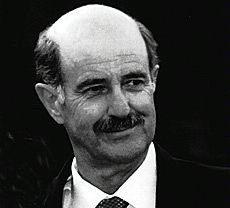
American poet and publisher Charles Potts generously donated his collection to USU's Special Collections in 2010. (photo by Terri Silverman)
SHARE
TRANSLATE
Comments and questions regarding this article may be directed to the contact person listed on this page.


