
Geology - BS, BA

About This Degree
Geology is the part of broader Earth Science that examines the solid Earth, its composition, history, structure, and how it interacts with the hydrosphere, atmosphere and biosphere.
In this study of how Earth works, geoscientists integrate knowledge of biology, chemistry, engineering, mathematics, and physics. Geologists help us gain energy, mineral, and water resources and evaluate and mitigate hazards due to earthquakes, floods, landslides, and volcanic eruptions, as well as waste disposal and global environmental change.
Students receive a BS by completing all required courses in the major. To receive a BA, students must also gain proficiency in one or more foreign languages.
Emphases:
Students may choose an emphasis in one of the following areas.
Professional:
The Professional emphasis in geology builds upon the core geology curriculum with courses tailored for learning the scientific, hands-on, and professional skills necessary in the modern workforce.
Hydrogeology-Engineering:
Hydrogeology is the sub-discipline within geology that deals with the distribution and movement of groundwater in the soil and rocks of the Earth’s crust. Students in this emphasis take engineering and hydrology focused courses in addition to their geology coursework as they study the scientific and engineering aspects of groundwater systems.
ADVISING
At a Glance
College: S.J. & Jessie E. Quinney College of Agriculture & Natural Resources
Department: Water, Earth & Environmental Sciences
USU Locations:
- Logan campus
Program Requirements
Career And Outcomes
Career Opportunities
Geology BS
Students who graduate with a traditional Bachelor's degree in Geology are rigorously trained and well-prepared to go on for graduate studies in the geosciences. With this standard degree, students can also pursue careers in: energy (gas, oil, geothermal, coal), mining, environmental consulting, and natural hazards assessment (earthquakes, landslide, etc.).
Professional Emphasis
The GeoWorkforce emphasis within the Geology degree is designed in consultation with industry advisors to provide the practical scientific and professional skills for employment with a Bachelor's degree across broad areas such as: environmental consulting, natural resource and energy extraction, and land management, policy, and government agencies.
Hydrogeology-Engineering Emphasis
The Hydro-Engineering emphasis in the Geology degree incorporates engineering coursework and provides a rigorous focus toward careers in engineering consulting, environmental cleanup, and groundwater.
Job Outlook
USU Locations
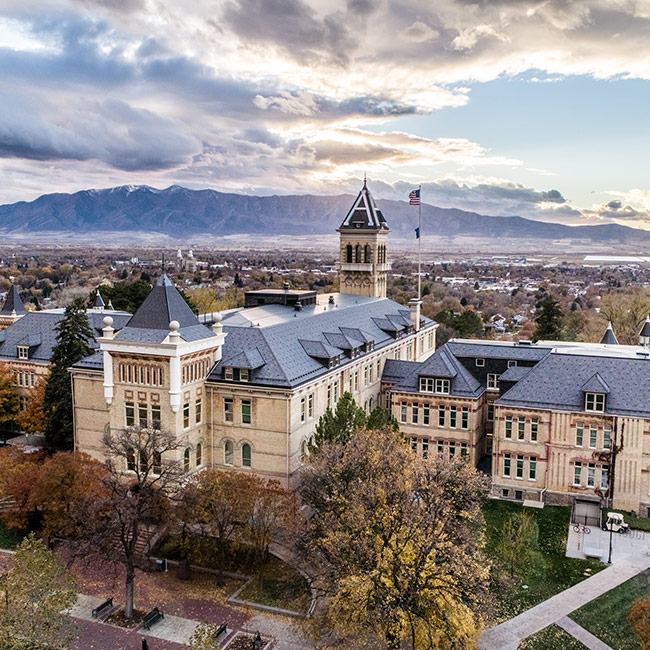
LOGAN CAMPUS
Admission
Admission Requirements
In addition to Utah State University’s admissions requirements, the geology program has additional requirements:
- First-Year students: First-Year students admitted to USU in good standing qualify for admission to this major.
- Transfer students: The minimum GPA is 2.5 for the General Geology option and 2.75 for the other emphases. For the Earth Science (Composite) Teaching degree, the minimum GPA is 3.0 for transfer students or ACT scores of 21 composite, 20 English/verbal and 19 mathematics/quantitative for First-Year students.
International students have additional admissions requirements.
Take The Next Step
Visit Campus
Schedule a campus tour and come see what it's all about.
Cost and Aid
Learn about tuition, scholarships, and other financial aid opportunities.
How to Apply
Start your degree path and apply now.
You May Also Be Interested In

Earth Science Teaching
Take coursework integrating geology, biology, chemistry, engineering, mathematics, and physics so you have a solid understanding of our natural surroundings, as well as hands-on classroom experience teaching students earth science.

Geography
Explore the relationships between human society and the physical environment while delving into research about the earth’s resources, whether you choose to specialize in mapping and information analysis or the dynamics of human behavior.

Geology
Learn some of the important principles and concepts of geology, and how they impact world societies, without having to earn a bachelor’s in it thanks to this minor. Understand the environment and its changes throughout history.